Guided Fly Fishing on the Gallatin River
An Iconic Montana Trout Stream
If you have ever pictured the quintessential western trout stream, you were likely picturing the Gallatin River. Famous for its starring role in the movie A River Runs Through It, the Gallatin is incredibly scenic, highly accessible, and full of wild trout.
Unlike the wide, sweeping bends of the Yellowstone or the steady riffles of the Madison, the Gallatin is an intimate, fast-flowing river. It tumbles out of the high country, carves through a spectacular limestone canyon, and eventually spills out into the agricultural heart of the Bozeman valley. Because the river changes so drastically from top to bottom, the Montana fishing regulations change with it. As a premier Montana fly fishing outfitter, our Bozeman fly fishing guides know that understanding these different zones is the absolute key to fishing the Gallatin successfully.
Wade Fishing the Gallatin Canyon near Big Sky
The river begins inside Yellowstone National Park, where it meanders through high alpine meadows as a small, crystal-clear stream. A specific Yellowstone fishing permit is required to fish this uppermost section, and it is strictly limited to wading.
As the river leaves the park and flows north past Big Sky, it parallels Highway 191 and enters the magnificent Gallatin Canyon. For anglers looking for guided fly fishing from Big Sky, this is the water that made the river famous. Towering rock walls frame miles of turbulent pocket water, deep plunge pools, and fast riffles. (Note: Once you cross out of the National Park, you must carry a Montana State Fishing License).
Wade Fishing Only:
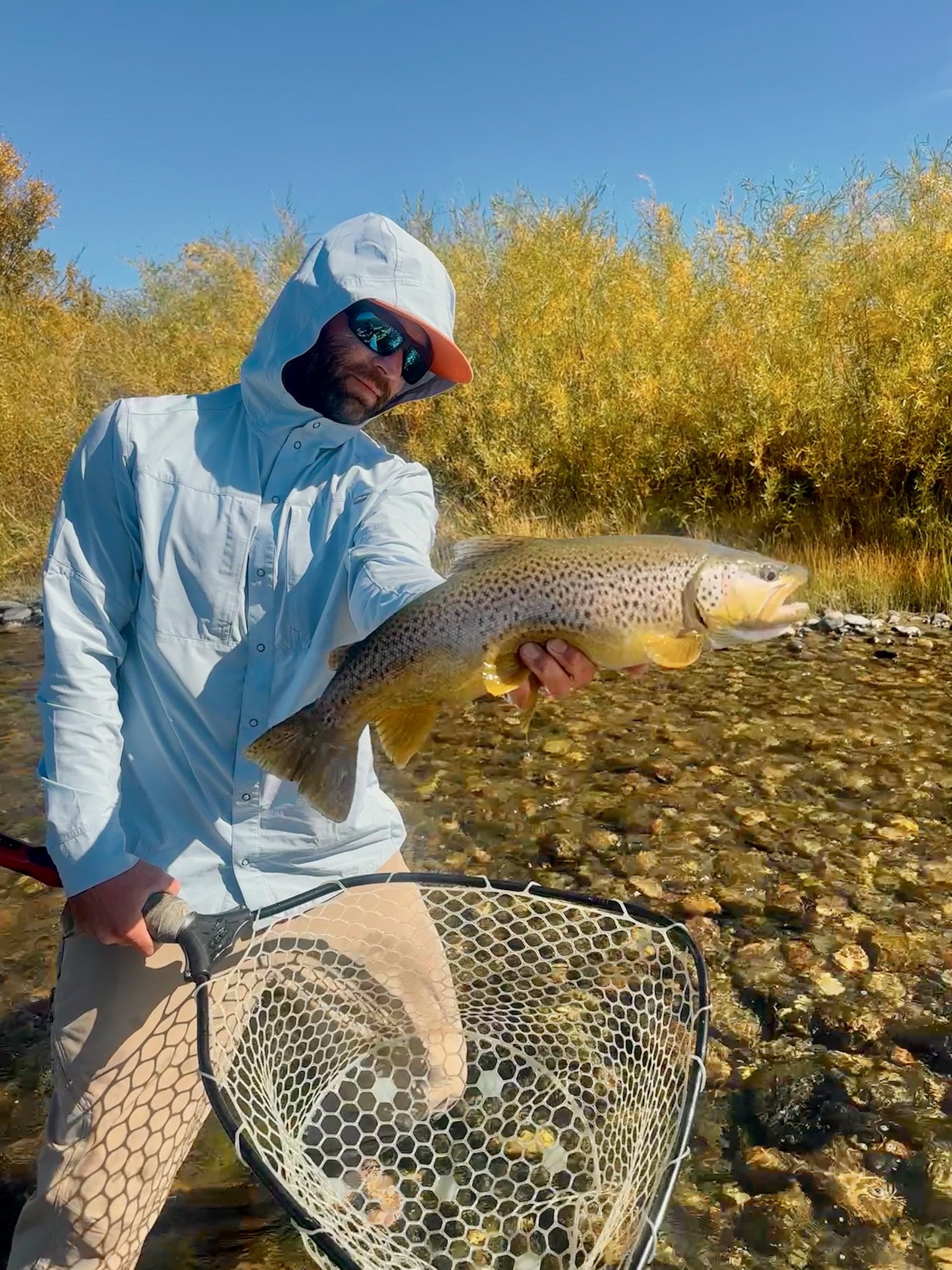
It is crucial to know that fishing from any watercraft is strictly prohibited on the Gallatin River through the canyon. This section is a dedicated paradise for Gallatin River wade trips. Anglers must navigate the rocky banks on foot to access the holding water. Because the currents are strong and the rocks are notoriously slick, wading here requires confident footwork. We highly recommend studded boots and a wading staff, which helps set the right expectations for beginners or older clients. For those willing to put in the footwork, the canyon offers phenomenal fishing for beautiful, wild rainbow and brown trout.
The Valley Floor:
Wading the Middle Gallatin West of Bozeman
Once the river pushes past the town of Gallatin Gateway and enters the wide, open valley west of Bozeman, its physical personality changes entirely. The canyon walls disappear, the gradient levels out, and the river breaks apart into a complex network of braided channels.
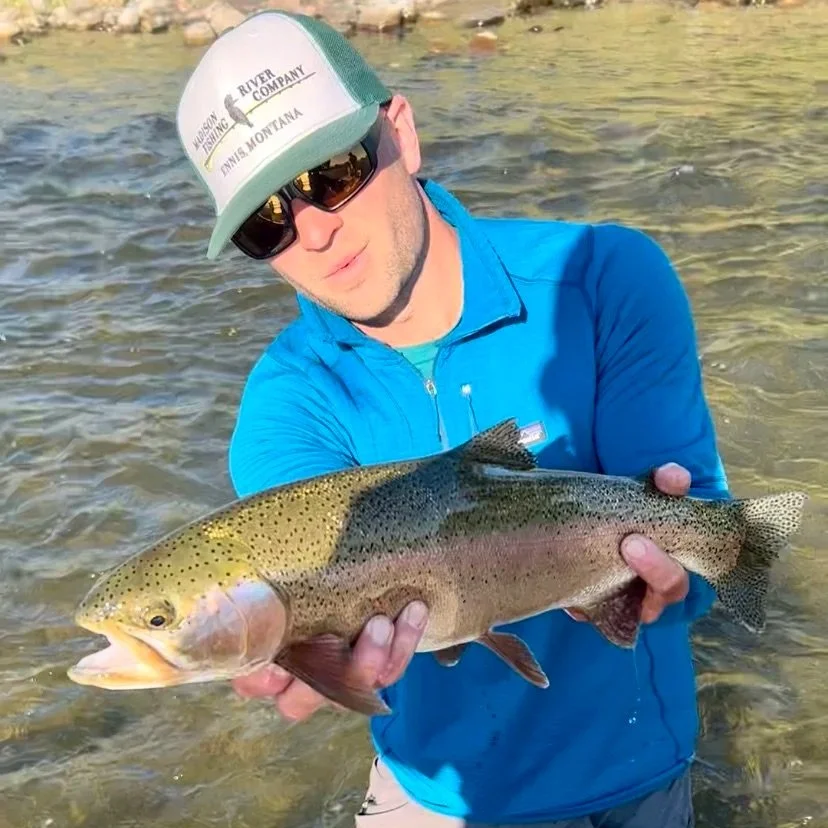
While the landscape opens up, the boating regulations do not. The Gallatin River remains strictly wade-fishing only throughout this entire middle valley section. Because the river runs through miles of private agricultural land, anglers must stick to the public access sites and carefully navigate the high-water marks. The valley water is incredibly productive, offering fantastic hopper fishing in the late summer for large brown trout that hide under the heavy willow banks.
Manhattan to Three Forks:
Float Fishing the Lower Gallatin
It is not until the main river merges with the East Gallatin River near the town of Manhattan that fishing from a boat finally becomes legal.
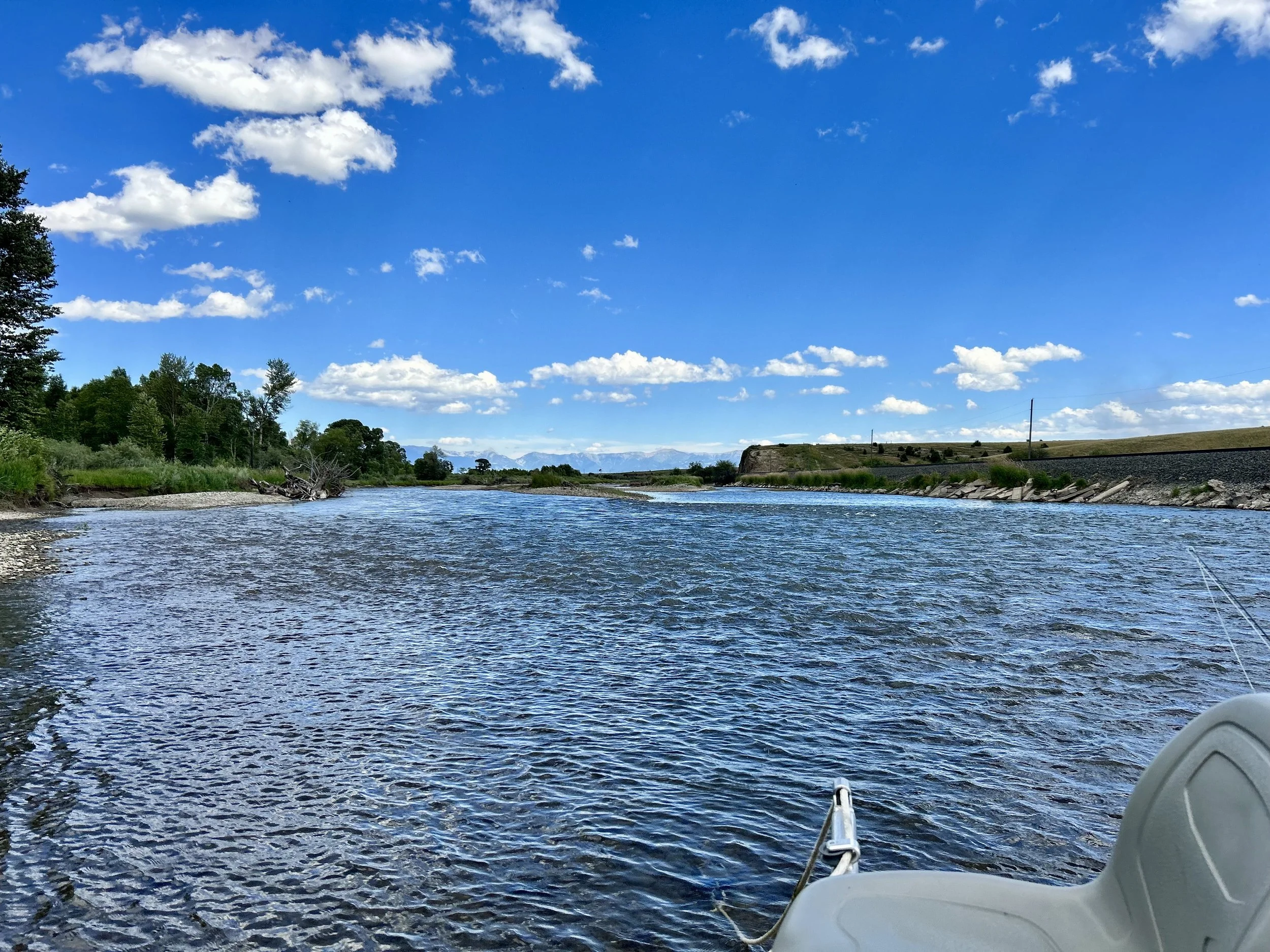
This lower stretch, flowing from the Manhattan area down to the Missouri River headwaters at Three Forks, is where we conduct our trips for Gallatin River float fishing. Navigating the Lower Gallatin in a drift boat or fishing raft is a highly technical, hands-on experience. The river is heavily wooded, featuring sharp bends, massive log jams, and deep undercut banks.
Because of the rich agricultural runoff and the warmer water temperatures in the valley, the trout down here grow significantly larger than the fish up in the canyon. Floating this lower section is a fantastic way to hunt for aggressive, heavy brown trout that hide deep inside the timber structure.
Seasonal Timing on the Gallatin
The Gallatin is a free-flowing freestone river, meaning its water clarity and volume are entirely dictated by the melting snowpack. Timing your trip is everything:
Spring Pre-Runoff (March - April): These months offer some of the best fishing of the entire year. Before the mountain snow begins to melt, the water is low and clear. Floating the lower river or wading the canyon during this early window produces fantastic nymph fishing.
The Summer Runoff (Mid-May - Late June): The Gallatin typically runs high and muddy as the mountain snowpack melts. Fishing is generally not recommended during this time. We recommend keeping an eye on the USGS Gallatin River Flow Chart to see exactly when the water volume begins to drop and clear.
Summer Dry Flies (July - August): Once the water clears in July, the canyon comes alive. This is the prime season for wade anglers to hike the banks and cast attractor dry flies, caddis, and spruce moths into the pocket water. (By late August, the lower floatable sections of the river often become too low and warm for ethical fishing).
Fall Streamer Fishing (September - October): As the temperatures drop, the Lower Gallatin becomes a premier float fishing destination once again. The brown trout get aggressive ahead of their spawn, making it an incredible time to strip large streamers from the drift boat.
Experience the Gallatin with Flyshot Outfitters
Whether you want to experience the iconic wade fishing of the Gallatin Canyon or take a technical float trip through the lower valley for big brown trout, we have you covered. At Flyshot Outfitters, we know exactly when and where this complex river fishes best.
We will help you determine if a focused Half-Day Wade Trip up high or a Full-Day Float Trip down low is the best fit for your specific goals and the current water conditions. We handle all the planning, the safety, and the rigging so you can simply step into the water and enjoy an incredible, low-pressure day on a legendary river.